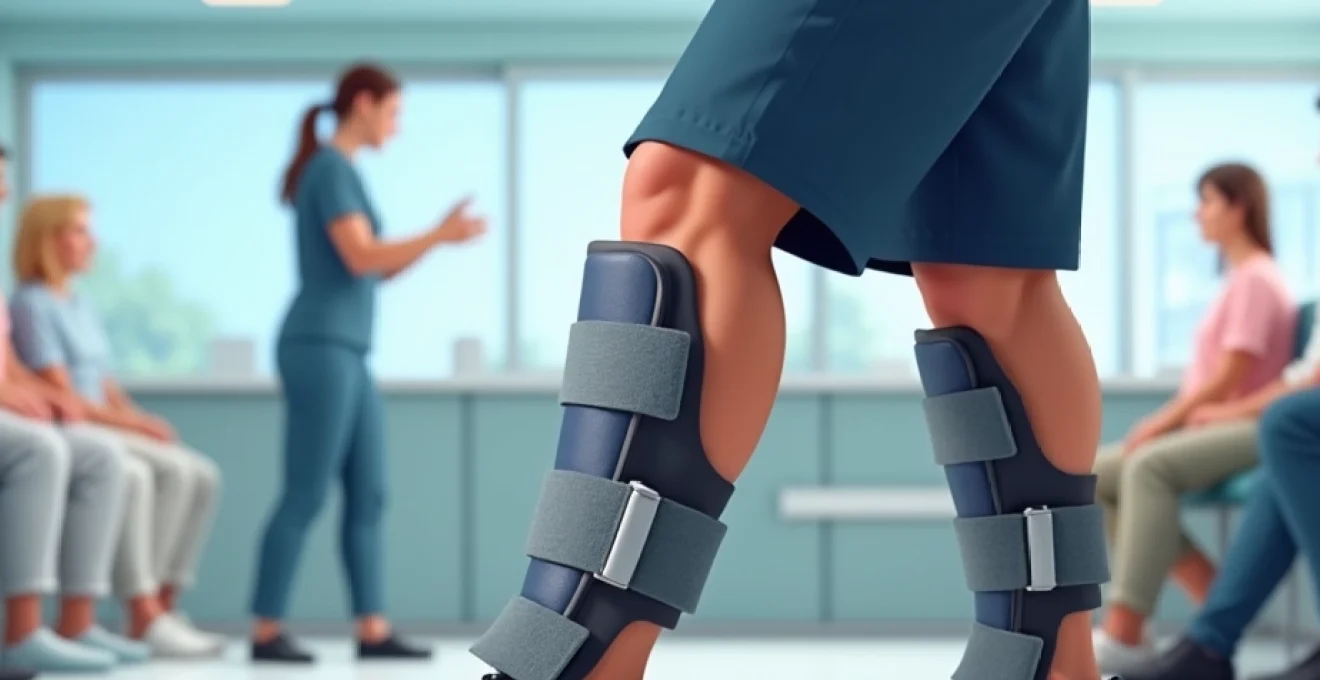
The Richie Brace has established itself as a leading ankle-foot orthosis (AFO) solution for treating complex lower extremity conditions over the past 25 years. Despite its widespread clinical success and preference among healthcare professionals for conditions such as posterior tibial tendon dysfunction and drop foot, practitioners and patients frequently encounter various challenges that can compromise treatment outcomes. Understanding these common problems is crucial for optimising patient care and ensuring successful long-term orthotic management. From fitting complications to material degradation issues, these challenges require careful consideration and proactive management strategies to maximise the therapeutic benefits of this sophisticated bracing system.
Fitting and sizing complications with richie brace AFO systems
Achieving optimal fit with the Richie Brace presents numerous technical challenges that can significantly impact patient outcomes and satisfaction. The complexity of the ankle-foot biomechanical system, combined with the need for precise customisation, creates multiple opportunities for fitting complications to arise. These issues often manifest during the initial fitting process and may persist throughout the treatment period if not properly addressed through careful assessment and adjustment protocols.
Inadequate Medial-Lateral ankle stabilisation due to improper strap tension
One of the most frequently encountered problems with the Richie Brace involves inadequate medial-lateral stabilisation resulting from improper strap tension adjustment. The delicate balance between providing sufficient support and maintaining patient comfort requires precise calibration of the strapping system. When straps are too loose, patients experience insufficient control of unwanted ankle motion, particularly during weight-bearing activities. This inadequate stabilisation can lead to continued symptoms and potentially worsen the underlying condition. Conversely, excessive strap tension creates pressure points, reduces circulation, and causes patient discomfort that may compromise compliance. The challenge becomes particularly pronounced in patients with fluctuating oedema levels, where strap tension requirements may change throughout the day.
Clinical experience demonstrates that achieving optimal strap tension requires multiple adjustments during the accommodation period. Patients often need education about proper tensioning techniques, as many individuals either over-tighten the straps in pursuit of maximum support or under-tighten them to avoid discomfort. The biomechanical demands of different activities also necessitate varying degrees of stabilisation, making it challenging to establish a single optimal tension setting.
Heel slippage issues in posterior shell design configuration
Heel slippage represents another significant challenge in Richie Brace fitting, particularly affecting the device’s ability to maintain proper foot positioning within the orthotic shell. This problem typically occurs when the posterior shell configuration fails to adequately capture the heel’s anatomy or when the footplate design doesn’t provide sufficient resistance to forward foot migration. Heel slippage compromises the brace’s biomechanical effectiveness by altering the intended alignment between the foot and the supporting structures.
The issue becomes particularly problematic during dynamic activities such as walking or stair climbing, where forward propulsive forces naturally tend to drive the foot anteriorly within the brace. When heel slippage occurs, patients often compensate by over-tightening straps or adjusting their gait pattern, both of which can lead to secondary problems. Additionally, consistent heel slippage can cause skin irritation and increase wear patterns on the brace materials, potentially shortening the device’s lifespan.
Tibial crest pressure points from incorrect anterior padding placement
Pressure point development along the tibial crest represents a common complication that can significantly impact patient tolerance and compliance with the Richie Brace. The anterior aspect of the tibia, being relatively prominent and having minimal soft tissue coverage, is particularly vulnerable to pressure-related complications when padding placement is suboptimal. These pressure points typically develop when the anterior shell or padding creates concentrated forces against the bony prominence during normal use.
The problem is often exacerbated by the brace’s rigid shell design, which may not accommodate individual anatomical variations in tibial prominence or soft tissue distribution. Patients frequently report discomfort, skin redness, or even tissue breakdown in these areas, particularly during extended wear periods. The challenge lies in providing adequate support and control while distributing forces evenly across the anterior lower leg to prevent concentrated pressure application.
Malleolar prominence irritation in standard width configurations
The medial and lateral malleoli present unique challenges in Richie Brace fitting due to their prominence and the variability in their anatomical configuration among patients. Standard width configurations may not accommodate individuals with particularly prominent malleoli, leading to pressure-related complications that can significantly impact comfort and function. The rigid nature of the brace shell, while necessary for providing adequate support, can create concentrated pressure points over these bony prominences.
This problem is particularly prevalent in patients with previous ankle injuries or surgical interventions that may have altered the normal ankle anatomy. The resulting irritation can range from mild discomfort to significant tissue breakdown, potentially requiring treatment modifications or even discontinuation of brace use. The challenge becomes more complex when considering that adequate malleolar support is often necessary for optimal ankle stabilisation, making it difficult to simply increase clearance around these areas.
Durability and material degradation concerns in clinical practice
The long-term durability of Richie Brace components presents ongoing challenges that can affect both treatment efficacy and cost-effectiveness. Given that many patients require extended or even lifelong use of their orthotic devices, understanding and managing material degradation patterns becomes crucial for maintaining optimal therapeutic outcomes. Various environmental factors, usage patterns, and material characteristics contribute to the degradation process, requiring careful monitoring and preventive maintenance strategies.
Velcro fastening system deterioration under daily loading cycles
The Velcro fastening system, while providing convenient adjustability and ease of application, represents one of the most vulnerable components of the Richie Brace system. Daily loading cycles, combined with exposure to moisture, dirt, and repeated stress, gradually degrade the hook and loop fastening mechanism. This deterioration typically manifests as reduced holding power, making it increasingly difficult to maintain proper strap tension and ankle stabilisation. The problem is particularly pronounced in active patients or those in dusty or humid environments where the Velcro components face additional stress factors.
Clinical observation reveals that Velcro deterioration often occurs unevenly across different strap locations, with high-stress areas showing accelerated wear patterns. This uneven degradation can alter the brace’s biomechanical function and may require selective component replacement or complete system renewal. The challenge lies in predicting replacement intervals and educating patients about proper Velcro maintenance to maximise component lifespan.
Polypropylene shell cracking at High-Stress articulation points
The polypropylene shell material, chosen for its combination of strength, flexibility, and biocompatibility, can develop stress-related cracking over time, particularly at high-load articulation points. These cracks typically appear at areas of maximum stress concentration, such as the ankle hinge mechanism or areas where the shell interfaces with dynamic loading during gait. While polypropylene offers excellent fatigue resistance compared to other thermoplastic materials, repeated loading cycles eventually exceed its endurance limit, leading to crack initiation and propagation.
The problem becomes particularly concerning when cracks compromise the structural integrity of critical support areas, potentially affecting the brace’s ability to provide adequate stabilisation. Environmental factors such as temperature extremes can accelerate crack development, with cold conditions making the material more brittle and heat potentially affecting its mechanical properties. Regular inspection protocols become essential for early crack detection and timely intervention before complete component failure occurs.
Foam padding compression loss in Weight-Bearing applications
Foam padding compression represents a gradual but significant problem that affects patient comfort and interface pressure distribution over time. The repeated loading cycles associated with weight-bearing activities cause progressive compression of the foam materials, reducing their ability to provide adequate cushioning and pressure relief. This compression loss is particularly problematic in high-pressure areas such as the heel region or along bony prominences where adequate padding is crucial for preventing tissue damage.
The compression process is often non-uniform, creating uneven pressure distribution patterns that can lead to the development of new pressure points or the exacerbation of existing ones. Different foam densities and compositions exhibit varying compression characteristics, making it challenging to predict replacement intervals. The problem is compounded by the fact that compression loss occurs gradually, making it difficult for patients to recognise when padding replacement becomes necessary.
Corrosion of metal hardware components in humid environments
Metal hardware components, including hinges, rivets, and adjustment mechanisms, can experience corrosion when exposed to humid environments or perspiration over extended periods. While manufacturers typically use corrosion-resistant materials and coatings, the combination of moisture, salt from perspiration, and mechanical wear can eventually compromise these protective measures. Corrosion not only affects the aesthetic appearance of the device but can also impact mechanical function and potentially create health concerns if corroded materials contact the skin.
The problem is particularly prevalent in patients who engage in activities that generate significant perspiration or those living in coastal environments with high salt content in the air. Regular cleaning and maintenance protocols can help mitigate corrosion development, but complete prevention remains challenging in high-risk environments. The replacement of individual hardware components may be possible in some cases, but advanced corrosion often requires complete device renewal.
Functional limitations during gait biomechanics
Despite its sophisticated design, the Richie Brace can impose certain functional limitations that affect natural gait biomechanics and overall mobility. These limitations arise from the inherent trade-off between providing necessary support and maintaining natural movement patterns. Understanding these functional constraints is essential for setting appropriate patient expectations and developing compensatory strategies that optimise overall function while achieving therapeutic goals.
The rigid shell design, while necessary for providing adequate support, can restrict certain aspects of normal ankle motion, particularly plantarflexion and dorsiflexion during the stance phase of gait. This restriction may alter the normal heel-to-toe progression during walking, potentially affecting energy efficiency and creating compensatory movement patterns in adjacent joints. Patients often report a sensation of walking on a “rocker” or experiencing reduced push-off power during propulsion phases of gait.
Ground clearance during the swing phase of gait can also be compromised, particularly in patients with pre-existing weakness or those requiring larger brace configurations. The added bulk and weight of the device may necessitate hip hiking or circumduction strategies to achieve adequate clearance, potentially increasing energy expenditure during ambulation. These compensatory patterns can lead to fatigue and may contribute to secondary problems in the hip or back regions over time.
Stair navigation presents particular challenges, as the brace may limit the ankle flexibility necessary for efficient stair climbing and descending. The inability to achieve normal ankle plantarflexion during stair descent can create balance concerns and may require modified techniques or additional assistive devices. Similarly, activities requiring rapid direction changes or uneven terrain navigation may be more challenging due to the altered proprioceptive feedback and movement restrictions imposed by the brace system.
Patient compliance and comfort challenges
Patient compliance represents one of the most significant challenges in successful Richie Brace treatment outcomes, with comfort issues being a primary factor influencing adherence to prescribed wearing schedules. The complexity of the device, combined with the need for consistent use to achieve therapeutic benefits, creates multiple opportunities for compliance problems to develop. Understanding and addressing these challenges is crucial for optimising treatment success and patient satisfaction.
Initial accommodation to the Richie Brace can be challenging for many patients, particularly those transitioning from less restrictive orthotic devices or no previous brace experience. The sensation of ankle restriction and the added bulk within footwear often requires a significant adjustment period during which patients may experience frustration or decreased willingness to continue treatment. This accommodation phase is critical, as early negative experiences can establish patterns of poor compliance that persist throughout the treatment period.
Seasonal comfort variations present ongoing challenges, with many patients reporting increased difficulty tolerating the device during warmer months due to heat retention and moisture buildup within the brace interface. The enclosed design, while necessary for providing adequate support, can create a microenvironment that promotes sweating and potential skin irritation. This problem is particularly pronounced in active patients or those living in warm climates where temperature management becomes a significant concern.
Footwear compatibility issues frequently impact patient acceptance and compliance with the Richie Brace system. The requirement for deep, supportive shoes can be particularly challenging for patients who prefer fashionable footwear or have occupational requirements that conflict with recommended shoe styles. Women often express frustration with the inability to wear dress shoes or heeled footwear, while men may struggle with the limited athletic shoe options that provide adequate accommodation. These lifestyle impacts can significantly affect long-term compliance if not properly addressed through patient education and footwear consultation.
Social and psychological factors also play important roles in compliance challenges, with some patients expressing embarrassment about the visible nature of the device or concerns about activity limitations. Younger patients may be particularly sensitive to the aesthetic aspects of brace wearing, potentially leading to selective compliance patterns that compromise treatment effectiveness. Body image concerns and fear of appearing different from peers can create significant barriers to consistent device use, requiring careful counselling and support strategies.
Maintenance and adjustment protocols for Long-Term use
Effective long-term management of the Richie Brace requires comprehensive maintenance and adjustment protocols that address both routine care requirements and the evolving needs of patients throughout their treatment course. The complexity of the device and the potential for various component degradation patterns necessitate structured approaches to monitoring, maintenance, and modification to ensure continued optimal function and patient satisfaction.
Regular inspection schedules become essential for early identification of potential problems before they progress to device failure or patient complications. These inspections should encompass all major components, including shell integrity, strap function, padding condition, and hardware operation. Establishing systematic inspection protocols helps ensure that no critical areas are overlooked and provides documentation for tracking device performance over time. Patients require education about basic inspection techniques and warning signs that indicate the need for professional evaluation.
Cleaning and hygiene protocols play crucial roles in maintaining both device function and patient health, particularly given the enclosed nature of the brace system and its proximity to the skin. Appropriate cleaning methods must balance effective hygiene maintenance with preservation of material properties and device integrity. Different components may require specific cleaning approaches, with some materials being sensitive to certain cleaning agents or methods. Patient education about proper cleaning techniques and frequency is essential for preventing odour, skin irritation, and material degradation.
Adjustment protocols must account for changes in patient condition, activity level, and anatomical characteristics that occur over time. Conditions such as muscle atrophy or hypertrophy, weight changes, or disease progression can alter the fit and function requirements of the brace system. Regular reassessment intervals help ensure that the device continues to meet patient needs and provide optimal therapeutic benefit. The ability to make minor adjustments can often extend device life and improve patient satisfaction without requiring complete replacement.
Component replacement strategies should be established based on expected wear patterns and individual patient factors that may accelerate degradation. Proactive replacement of high-wear components such as straps, padding, or hardware can prevent complete device failure and maintain consistent therapeutic function. Understanding the expected lifespan of different components helps in planning replacement schedules and managing associated costs. Documentation of replacement intervals and reasons provides valuable information for optimising future device specifications and maintenance protocols.