Experiencing double vision following LASIK surgery can be an alarming and disorienting complication that affects a small percentage of patients undergoing this popular refractive procedure. While LASIK boasts impressive success rates with over 96% of patients achieving 20/20 vision or better, diplopia remains one of the most concerning visual disturbances that can occur during the healing process. Understanding the underlying mechanisms, potential causes, and expected recovery timelines becomes crucial for both patients and practitioners navigating post-surgical care. The complexity of binocular vision and its delicate balance makes any disruption particularly noticeable, especially when patients have invested in the procedure with expectations of crystal-clear sight.
Diplopia pathophysiology following LASIK corneal ablation
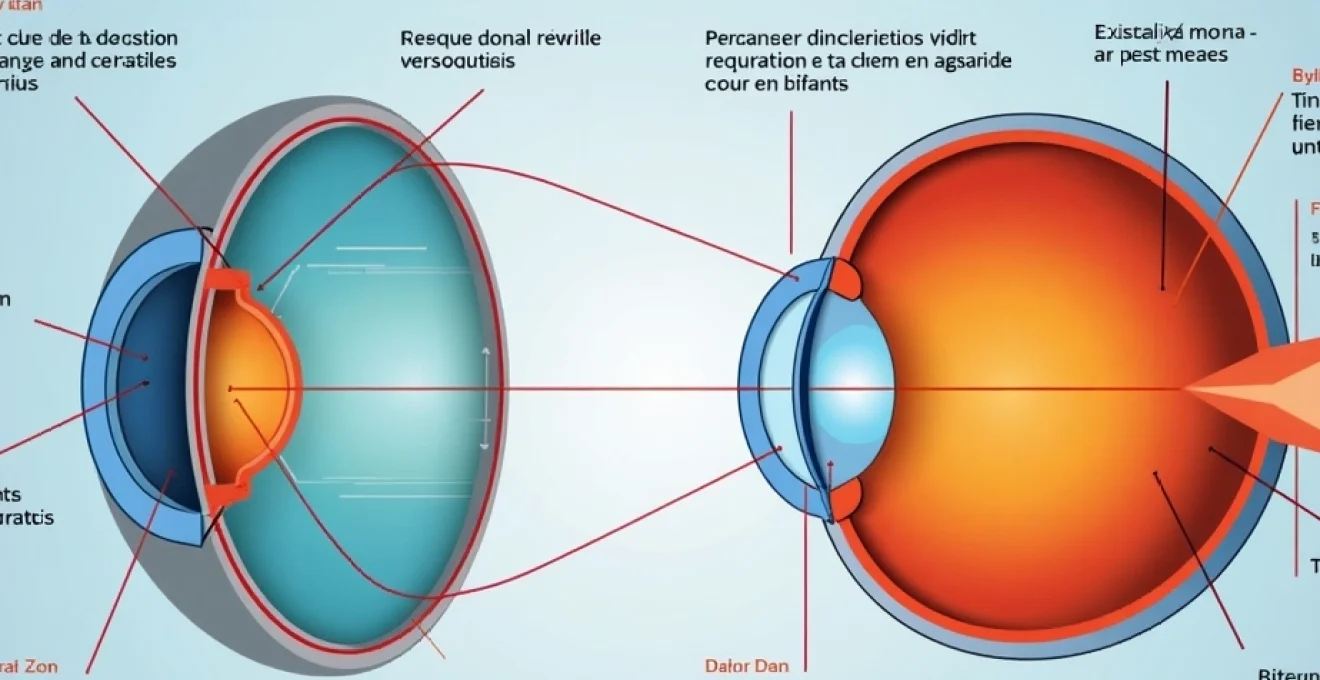
The development of double vision after LASIK surgery stems from intricate disruptions in the eye’s optical system, particularly affecting how light rays converge on the retina. Corneal ablation fundamentally alters the anterior surface geometry, creating temporary irregularities that can scatter incoming light rays in multiple directions. This scattering effect produces what patients describe as ghost images or shadowed duplications of objects in their visual field.
Binocular vision disruption mechanisms Post-Excimer laser treatment
The excimer laser’s precision in removing corneal tissue can inadvertently create microscopic surface irregularities during the healing phase. These irregularities act like tiny prisms, bending light at slightly different angles and creating multiple focal points within the eye. When both eyes experience varying degrees of these optical distortions, the brain struggles to fuse the images into a single, coherent picture. The result manifests as diplopia, where patients perceive two overlapping images of the same object.
Research indicates that binocular vision disruption occurs more frequently in patients who undergo simultaneous bilateral LASIK procedures. The brain’s visual cortex requires consistent input from both eyes to maintain proper fusion, and when both eyes are simultaneously healing from surgical intervention, this delicate balance becomes compromised. Neural adaptation mechanisms typically compensate for minor optical discrepancies, but the acute changes following LASIK can overwhelm these natural correction systems.
Corneal surface irregularities and optical aberration induction
Post-LASIK corneal irregularities primarily manifest as higher-order aberrations, including coma, trefoil, and spherical aberrations. These optical imperfections create complex light scatter patterns that contribute significantly to diplopia symptoms. Coma aberrations, in particular, cause light sources to appear with comet-like tails, while spherical aberrations create multiple concentric focus points. The combination of these effects can produce the characteristic double or multiple images that patients report.
Modern topographic analysis reveals that even minimal surface irregularities measuring less than one micron in height can generate noticeable visual disturbances. The cornea’s role as the eye’s primary refractive surface means that any deviation from its intended smooth curvature multiplies throughout the entire optical pathway. Wavefront aberrometry studies demonstrate that post-LASIK eyes often exhibit increased higher-order aberrations for several months following surgery, correlating directly with diplopia severity and duration.
Tear film instability impact on visual axis alignment
LASIK surgery inevitably disrupts corneal nerve endings responsible for triggering natural tear production, leading to temporary but significant tear film instability. This disruption creates an uneven optical surface that changes constantly as the tear film breaks up and reforms. The irregular tear layer acts as a dynamic optical element, continuously altering the eye’s refractive properties and contributing to visual fluctuations throughout the day.
Studies show that tear film breakup time decreases dramatically in the first three months following LASIK, often dropping below five seconds compared to the normal range of 15-20 seconds. This instability means that visual quality, including diplopia symptoms, can vary significantly based on environmental conditions, humidity levels, and individual tear production patterns. The temporal nature of these symptoms often confuses patients who experience intermittent double vision that seems to improve with artificial tear application.
Monovision LASIK-Induced aniseikonia effects
Patients who undergo monovision LASIK correction face unique challenges related to aniseikonia , a condition where the brain perceives different image sizes from each eye. When one eye is corrected for distance vision while the other remains slightly myopic for near tasks, the resulting image size discrepancy can trigger diplopia symptoms, particularly during the adaptation phase. This effect becomes more pronounced in patients over 45 years old, whose natural accommodation abilities have already begun to decline.
The brain’s remarkable ability to suppress the non-dominant eye’s image typically develops over 6-8 weeks following monovision LASIK. However, during this adaptation period, patients frequently experience overlapping images as their visual cortex learns to alternately favour input from each eye based on viewing distance. Successful monovision adaptation requires careful patient selection and realistic expectation management, as approximately 15-20% of patients cannot fully adapt to this correction strategy.
Temporary diplopia aetiologies in Post-LASIK patients
Understanding the various temporary causes of double vision following LASIK surgery helps distinguish between expected healing responses and complications requiring intervention. Most diplopia cases resolve spontaneously as the cornea heals and stabilises, but recognising the underlying mechanisms provides valuable insight into expected recovery timelines and appropriate management strategies.
Corneal Oedema-Related refractive index variations
Corneal swelling represents one of the most common causes of temporary post-LASIK diplopia, particularly during the first 48-72 hours following surgery. The surgical trauma triggers an inflammatory response that increases corneal thickness by 10-15% above baseline measurements. This oedema doesn’t distribute evenly across the corneal surface, creating localised areas of varying refractive indices that scatter light unpredictably.
The corneal stroma’s highly organised collagen structure becomes temporarily disrupted by excess fluid accumulation, leading to decreased optical transparency and increased light scatter. Pachymetry measurements typically show gradual thickness reduction over the first two weeks post-surgery, directly correlating with diplopia symptom improvement. Patients often notice that double vision symptoms are most pronounced upon waking when natural corneal dehydration mechanisms have been inactive during sleep.
Dry eye syndrome and meibomian gland dysfunction
Post-LASIK dry eye syndrome affects up to 95% of patients during the initial healing phase, with symptoms persisting beyond six months in approximately 20% of cases. The disruption of corneal sensory nerves reduces the natural blink reflex and decreases tear production through the lacrimal-corneal reflex arc. Additionally, surgical manipulation can exacerbate pre-existing meibomian gland dysfunction, further compromising tear film quality and stability.
The relationship between dry eye and diplopia becomes particularly evident when examining tear film breakup patterns using fluorescein staining. Areas of rapid tear film breakup create optical discontinuities that function like microscopic prisms, deflecting light rays at various angles. Lipid layer thickness measurements using interferometry reveal significantly reduced tear film stability in post-LASIK eyes, explaining why artificial tear application often provides immediate, albeit temporary, relief from double vision symptoms.
Research demonstrates that patients with pre-existing dry eye symptoms face a three-fold increased risk of experiencing prolonged diplopia following LASIK surgery, highlighting the importance of comprehensive preoperative tear film assessment.
Flap-related complications: striae and microstriae formation
LASIK flap creation and repositioning can result in microscopic folds or wrinkles called striae, which create optical irregularities contributing to diplopia symptoms. These formations occur most commonly when the flap doesn’t perfectly conform to the underlying stromal bed, often due to subtle differences in hydration levels or mechanical tension during repositioning. Microstriae, invisible to routine slit-lamp examination, can still generate significant visual disturbances despite their microscopic dimensions.
Modern femtosecond laser flap creation has reduced the incidence of clinically significant striae to less than 1% of cases, compared to 3-5% with mechanical microkeratome techniques. However, even subclinical striae can cause subtle optical aberrations that manifest as mild diplopia or ghost images. Optical coherence tomography studies reveal that most microstriae spontaneously resolve within 4-6 weeks as the flap-stromal interface heals and remodels, explaining why many diplopia cases improve gradually during this timeframe.
Overcorrection-induced myopic or hyperopic shift
Refractive overcorrection following LASIK can create significant anisometropia between eyes, particularly when treatments are performed on separate days or when individual healing responses vary dramatically. Even modest overcorrections of 0.75-1.00 dioptres can trigger diplopia symptoms, especially in patients who previously wore similar prescriptions in both eyes. The brain’s fusion mechanisms struggle to compensate for sudden refractive disparities that exceed its natural adaptation capabilities.
Hyperopic overcorrections tend to cause more pronounced diplopia symptoms than myopic shifts of similar magnitude, possibly due to the increased accommodative demands placed on the visual system. Patients experiencing hyperopic overcorrection often report that diplopia symptoms worsen with near tasks and improve when viewing distant objects. Accommodative convergence measurements in these patients frequently show disrupted normal ratios, contributing to binocular vision instability and diplopia persistence.
Permanent double vision risk factors and surgical complications
While most post-LASIK diplopia cases resolve within 3-6 months, certain surgical complications and patient factors can lead to persistent double vision requiring additional intervention. Understanding these risk factors enables better patient counselling and surgical planning to minimise long-term visual complications.
Decentred ablation zone consequences on coma aberrations
Ablation zone decentration represents one of the most serious complications that can result in permanent diplopia following LASIK surgery. When the laser treatment isn’t perfectly centred over the pupil, it creates asymmetric corneal flattening that generates significant coma aberrations. These aberrations cause light sources to appear with characteristic comet-like tails, and when present in different orientations between the two eyes, they create insurmountable fusion difficulties.
Studies indicate that decentrations greater than 0.5mm from the pupil centre correlate with persistent visual complaints in over 40% of patients. The severity of resulting diplopia depends not only on the magnitude of decentration but also on individual pupil size and the original refractive error being corrected. Wavefront analysis in decentred ablation cases shows dramatically elevated coma values that often exceed the eye’s natural compensation mechanisms, necessitating surgical revision or specialty contact lens correction.
Ectasia development following excessive tissue removal
Post-LASIK ectasia, though rare, represents a devastating complication that can cause progressive diplopia and visual deterioration. This condition occurs when excessive corneal tissue removal weakens the structural integrity, allowing intraocular pressure to gradually deform the corneal surface. The resulting irregular astigmatism creates complex optical aberrations that the visual system cannot accommodate, leading to persistent double vision and progressive myopic shift.
Risk factors for ectasia development include thin preoperative corneal thickness, high degrees of correction, and abnormal corneal topography patterns suggesting subclinical keratoconus. Biomechanical assessments using instruments like the Ocular Response Analyzer help identify patients at increased risk, but ectasia can occasionally occur even in seemingly appropriate candidates. The diplopia associated with ectasia typically worsens progressively over months to years, distinguishing it from temporary post-surgical healing responses.
Corneal ectasia affects approximately 0.2-0.6% of LASIK patients, but when it occurs, it often results in permanent visual disturbances including diplopia that may require corneal transplantation for resolution.
Interface debris and diffuse lamellar keratitis impact
Foreign material trapped between the LASIK flap and stromal bed can trigger an inflammatory response known as diffuse lamellar keratitis (DLK). This condition creates optical irregularities at the flap-stromal interface that scatter light and contribute to diplopia symptoms. Interface debris can include epithelial cells, inflammatory mediates, or environmental particles introduced during surgery or the immediate postoperative period.
DLK typically develops within the first week following LASIK and can progress rapidly if left untreated. The inflammatory infiltrate creates localised areas of reduced optical transparency that function like microscopic obstacles in the light path. Confocal microscopy studies reveal that even mild DLK can cause measurable increases in light scatter that correlate with patient-reported diplopia symptoms. Prompt treatment with intensive topical corticosteroids usually resolves the inflammation, but severe cases may require flap lifting and interface irrigation.
Pre-existing extraocular muscle imbalance exacerbation
Patients with subclinical extraocular muscle imbalances may experience diplopia following LASIK due to disruption of their previously established compensatory mechanisms. Small phorias that were successfully managed through accommodation and convergence can become decompensated when the visual system is stressed by post-surgical healing processes. This phenomenon occurs most commonly in patients with vertical muscle imbalances or those with latent convergence insufficiency.
The stress of adapting to new visual inputs following LASIK can overwhelm the fusional reserve mechanisms that previously maintained single binocular vision. Prism adaptation testing performed preoperatively can help identify patients at risk for diplopia development, allowing for appropriate counselling and potential surgical modification. Some patients may benefit from temporary prism correction or vision therapy to restore comfortable binocular vision during the healing phase.
Diplopia recovery timeline and resolution patterns
The recovery from post-LASIK diplopia follows predictable patterns in most patients, with specific milestones that help distinguish normal healing from complications requiring intervention. Understanding these timelines enables appropriate patient counselling and management decisions throughout the recovery process. Most patients experience the most pronounced diplopia symptoms during the first 24-48 hours post-surgery, when corneal oedema peaks and tear film stability is at its lowest point.
The first week typically shows gradual improvement in diplopia symptoms as corneal swelling subsides and initial epithelial healing occurs. Patients often report that symptoms are most noticeable upon waking and gradually improve throughout the day as natural tear production increases and corneal hydration stabilises. By the end of the first month, approximately 70-80% of patients with post-LASIK diplopia experience complete or near-complete resolution of their symptoms.
The three-month mark represents a critical assessment point, as persistent diplopia beyond this timeframe may indicate complications requiring intervention. Corneal topography performed at this stage can identify residual irregularities or aberrations that may need addressing through enhancement procedures or specialty contact lens fitting. Patients who continue experiencing diplopia at six months post-surgery typically require comprehensive workup to identify and address underlying causes, as spontaneous improvement becomes increasingly unlikely beyond this point.
Diagnostic approaches for Post-LASIK binocular vision assessment
Comprehensive evaluation of post-LASIK diplopia requires sophisticated diagnostic approaches that can identify both optical and binocular causes of double vision. The assessment begins with detailed symptom characterisation, including whether diplopia is monocular or binocular, constant or intermittent, and varies with gaze direction or viewing distance. This information helps differentiate between optical aberrations within individual eyes versus fusion difficulties between the two eyes.
Advanced corneal imaging using devices like the Pentacam or Galilei provides detailed analysis of corneal shape and regularity, identifying subtle irregularities that may not be apparent on routine examination. Wavefront aberrometry quantifies higher-order aberrations that contribute to optical quality degradation, while corneal topography maps reveal asymmetries between eyes that could explain fusion difficulties. These objective measurements correlate well with subjective symptom severity and help guide treatment decisions.
Binocular vision testing includes assessment of phoria measurements, fusional reserves, and stereoacuity to identify any underlying muscle imbalances that may have been unmasked by the LASIK procedure. The Worth 4-dot test and red-green anaglyph testing can help localise fusion difficulties and determine whether diplopia symptoms are primarily optical or muscular in origin. Maddox rod testing provides precise measurements of any latent muscle imbalances that may require prism correction or vision therapy.
Comprehensive post-LASIK diplopia assessment should include both
optical and binocular function assessments to differentiate between corneal irregularities and extraocular muscle dysfunction as potential diplopia sources.
The temporal profile of diplopia symptoms provides valuable diagnostic information, with acute onset typically indicating inflammatory or traumatic causes, while gradual progression suggests structural complications like ectasia or interface scarring. Cover testing performed at various distances and gaze positions can reveal latent muscle imbalances that may have been decompensated by the surgical procedure. Modern eye tracking technology offers objective measurements of fixation stability and saccadic accuracy, providing quantitative data on binocular coordination difficulties.
Contrast sensitivity testing often reveals functional visual deficits that correlate with diplopia severity, as reduced contrast discrimination can exacerbate fusion difficulties in marginal cases. The Pelli-Robson chart and CSV-1000 testing provide standardised assessments of contrast function across different spatial frequencies. Patients with significant higher-order aberrations frequently show preferential losses in intermediate spatial frequencies, corresponding to the wavelengths most affected by coma and trefoil aberrations.
Management strategies for LASIK-associated double vision
The management of post-LASIK diplopia requires a systematic approach tailored to the underlying cause and symptom severity. Conservative management remains the first-line approach for most cases, as the majority of diplopia symptoms resolve spontaneously during the natural healing process. Artificial tear supplementation forms the cornerstone of initial therapy, with preservative-free formulations preferred to avoid additional corneal irritation during the healing phase.
Aggressive dry eye management often provides dramatic improvement in diplopia symptoms, particularly during the first three months post-surgery when tear film instability peaks. Punctal plug insertion can help maintain tear film volume and stability, while warm compress therapy and lid hygiene measures address concurrent meibomian gland dysfunction. Some patients benefit from prescription medications like cyclosporine or lifitegrast to enhance natural tear production and reduce ocular surface inflammation.
For cases involving significant refractive errors or optical aberrations, specialty contact lens fitting may provide effective diplopia management while avoiding additional surgical intervention. Scleral lenses, in particular, create a smooth optical surface that masks underlying corneal irregularities and provides stable vision throughout the day. Wavefront-guided contact lens designs can address specific higher-order aberrations, though their fitting requires specialised expertise and multiple adjustment visits.
Prism correction offers an effective solution for diplopia caused by extraocular muscle imbalances or fusion difficulties that don’t respond to optical correction alone. Temporary prism therapy using stick-on Fresnel prisms allows for easy adjustment during the healing phase, while permanent prism incorporation into spectacle lenses provides long-term stability. The prism amount typically ranges from 1-6 prism dioptres, depending on the magnitude of muscle imbalance and individual tolerance levels.
Studies demonstrate that early intervention with appropriate prism correction can prevent the development of suppression mechanisms that may complicate later binocular vision rehabilitation efforts.
Vision therapy programmes designed specifically for post-refractive surgery patients can help restore comfortable binocular vision through targeted exercises that improve fusional reserves and accommodation-convergence relationships. These programmes typically span 8-12 weeks and focus on enhancing the brain’s ability to integrate slightly disparate images from each eye. Computer-based vision therapy systems provide standardised protocols and objective progress monitoring, though traditional office-based therapy often yields superior results in complex cases.
When conservative measures fail to provide adequate relief, surgical enhancement procedures may be necessary to address underlying optical or structural abnormalities. Enhancement surgery for residual refractive errors should generally be delayed until at least 3-6 months post-initial surgery to allow for complete healing and stabilisation. Topography-guided ablation techniques can address specific irregular astigmatism patterns that contribute to diplopia, while wavefront-guided treatments target higher-order aberrations more precisely.
For severe cases involving complications like ectasia or significant interface scarring, more advanced interventions may be required. Corneal collagen crosslinking can halt ectasia progression and potentially improve optical regularity, though visual recovery may take 6-12 months. In extreme cases, penetrating or lamellar keratoplasty might be necessary to restore optical clarity and eliminate diplopia symptoms, though these procedures carry their own risks and extended recovery periods.
The management timeline for post-LASIK diplopia typically follows a stepwise approach, beginning with conservative measures and progressing to more invasive interventions only when necessary. Most patients respond well to artificial tear therapy and time, with symptoms resolving within 1-3 months. Those who don’t improve by the three-month mark warrant more detailed evaluation and consideration of specialty contact lens fitting or prism correction. Enhancement surgery should be reserved for cases with documented optical abnormalities that persist beyond six months and significantly impact quality of life.
Patient education plays a crucial role in successful diplopia management, as understanding the expected recovery timeline helps reduce anxiety and improve treatment compliance. Regular follow-up appointments allow for symptom monitoring and treatment adjustment, while providing opportunities to address patient concerns and modify therapy approaches based on healing progress. The psychological impact of unexpected visual disturbances shouldn’t be underestimated, and some patients benefit from counselling or support groups to cope with the temporary disruption to their daily activities.
Prevention strategies for post-LASIK diplopia begin with thorough preoperative screening to identify high-risk patients and optimise surgical planning. Dry eye assessment and treatment prior to surgery can reduce the severity and duration of post-operative symptoms, while careful measurement of pupil size and corneal thickness helps guide appropriate ablation zone design. Patients with pre-existing binocular vision disorders may benefit from vision therapy before surgery to maximise their fusional reserves and reduce the risk of decompensation during healing.